Valet contracts & proposals
A better agreement.
For both sides of the curb.
A profitable valet operation. A property confident in its service. We study the demand, plan the staffing, and build the contract—then present it to the property on your valet company’s behalf.
01 / Start at the property
Every stand has
its own rhythm.
The residential drive and the restaurant entrance can be busiest at entirely different times. We evaluate each stand before recommending how many people it needs, in which roles, and when.
Arrivals, retrievals, peak periods, parking distance, events, and seasonal changes.
Attendant and supervisor counts by stand, shift overlap, and the service level to protect.
Expected collections against labor, operating costs, and the property’s share.
02 / Choose the structure
The contract should fit
the operation.
Revenue share, flat price, hourly, management fee—or a combination. We compare the economics and responsibilities before recommending an arrangement.
Revenue shareShare the income. Define what counts.
The operator and property share an agreed revenue base. We model the split alongside labor and operating costs, and spell out how validations, subscriptions, refunds, and fees affect the calculation.
Flat priceA defined service for a predictable fee.
The property pays a fixed amount for an agreed scope. We connect that price to service hours, stand coverage, and expected volume, with terms for extra coverage and changes in demand.
Hourly staffingPay for the coverage the property needs.
Charges follow hours worked at agreed rates by role. We recommend attendants and supervisors by stand and time period, and define overtime, minimum coverage, and approval of additional hours.
Management feeSeparate the cost of service from the fee to run it.
The property funds agreed operating costs and pays the operator a fixed or percentage management fee. We identify reimbursable expenses, the fee calculation, budget approvals, and the reporting behind each invoice.
Minimum guaranteeA baseline return, with room for upside.
The operator commits to an agreed minimum payment to the property, potentially with a share above a threshold. We test whether projected collections can support that commitment after staffing and operating costs, including quieter periods.
Per vehicle or eventTie the price to a defined unit of service.
A property, venue, or validation partner pays per eligible vehicle, or a quoted price for an event. We define what is included, expected volume, minimum staffing, service windows, and overage terms.
Hybrid arrangementsCombine the pieces around the operation.
Hourly costs plus a management fee. Revenue offsets against the property’s bill. A share of the remaining surplus. We model how the components work together, who covers a shortfall, and how both sides participate when the operation earns more.
03 / Make the economics work
Room for profit.
Reasons to say yes.
Valletto connects the property and the valet operator. We help you make a proposal the property can understand, with a service plan your team can afford to deliver.
For the valet operator
A staffing plan grounded in demand, a view of operating margin, and clear compensation for running the service.
For the property
Defined coverage, transparent costs, and a clear account of what it pays, what it receives, and how performance is reviewed.
We compare quieter, expected, and busier scenarios. Projections show their assumptions so both parties can see where the economics change.
04 / Put it in writing
The numbers, the terms,
and the presentation.
We draft the proposed contract and commercial terms, prepare the supporting proposal, and present the case to property management on your behalf. Both parties can review the same scope, assumptions, and responsibilities.
Stands, operating hours, roles, coverage, service expectations, and additional staffing approvals.
Who collects, which costs are included, how fees and shares are calculated, and who covers a shortfall.
Supporting records, reconciliation, invoice timing, payment terms, and performance reviews.
Equipment, insurance responsibilities, launch plans, contract duration, renewal, and exit terms.
Inside your proposal
See the demand.
See the plan.
A clear picture of coverage through the week, who works at each stand, and the shifts behind every scheduled hour. This is how we make a staffing recommendation easy to review together.
A week at the curb.
2Valet stands
195Scheduled hours / week
36Supervisor-hours included
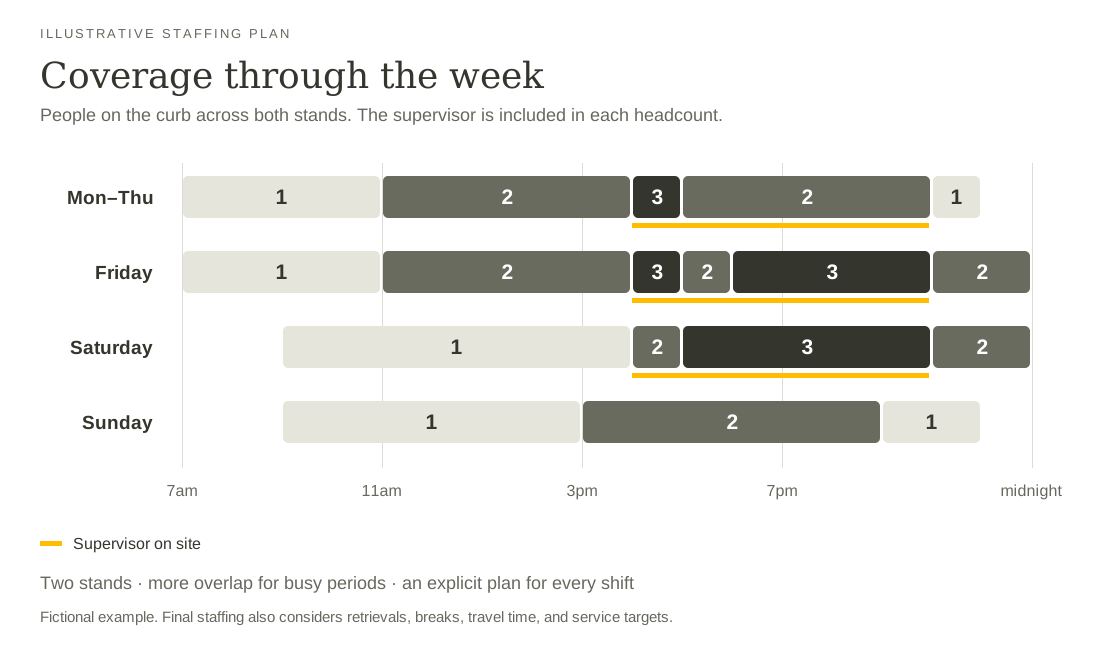
Swipe the chart to see the full day →
Friday, person by person.
| Shift | Covers | Role | Hours |
|---|---|---|---|
| 7am–3pm | Residential drive | Attendant | 8 |
| 11am–5pm | Restaurant entrance | Attendant | 6 |
| 3pm–midnight | Residential drive | Attendant | 9 |
| 4pm–10pm | Both stands | Supervisor | 6 |
| 6pm–midnight | Restaurant entrance | Attendant | 6 |
Swipe the table to see roles and hours →
The supervisor works across both stands and is already included in the coverage chart. Each person’s shift contributes to the weekly hours.
See the full weekly shift plan
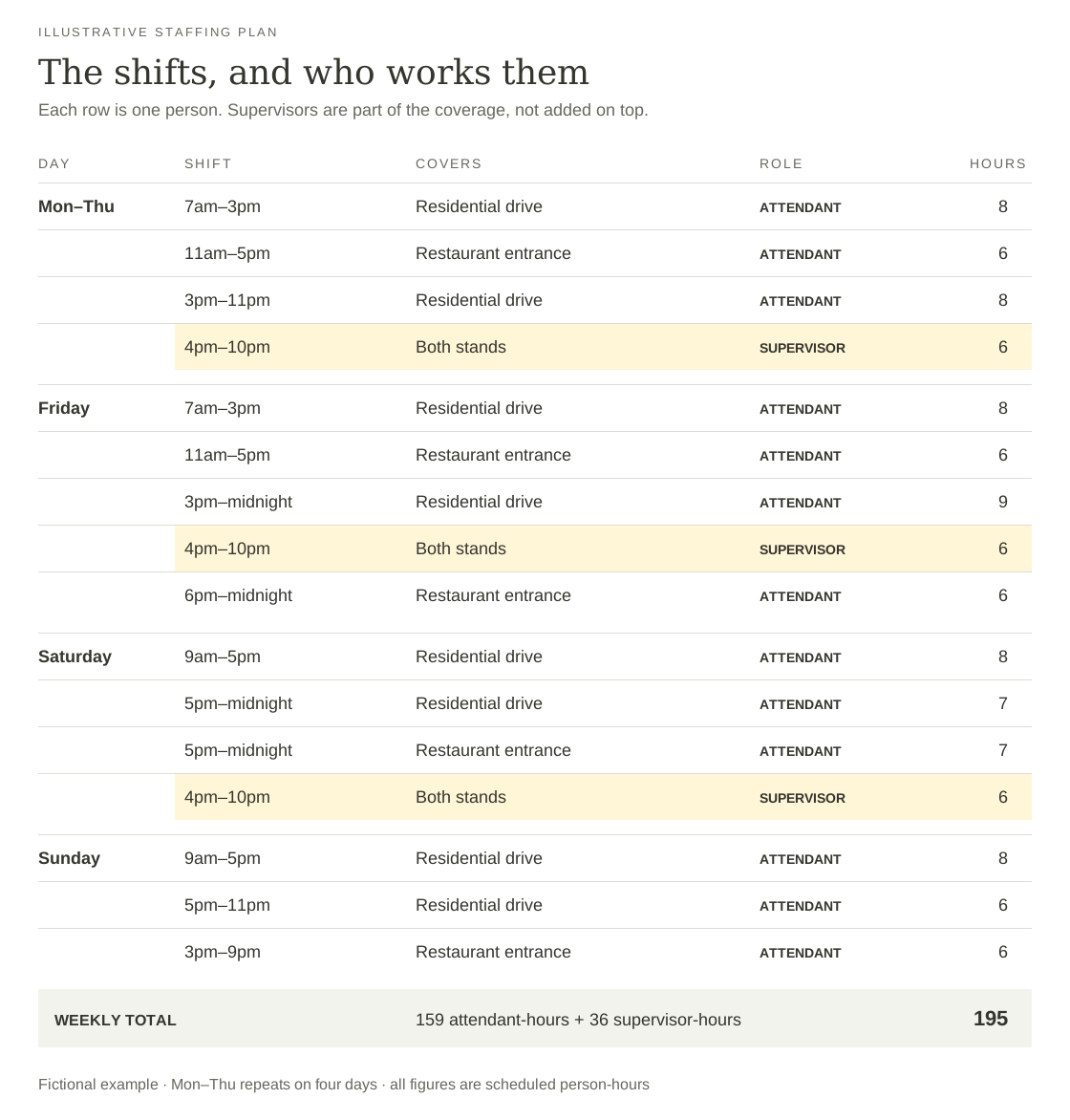
Fictional figures show the format of the analysis. Your recommendation also accounts for retrievals, parking distance, breaks, and service targets.
From opportunity to proposal
Bring us the property.
Let’s build the agreement.
Bidding on a new location or revisiting an existing contract? Share the property, the service expectations, and whatever records you have. We’ll help turn them into a staffing plan, a financial model, and a proposal ready for the conversation.